

Inspired by Stephen Skolnick's work on "Vitamin Q" this article looks at Queuosine—a fascinating molecule at the heart of the gut-brain connection through a genetic lens.
Queuosine is not a supplement, but a fundamental piece of our biology. It's a modified nucleoside, sourced from our microbiome, that sits at the crossroads of our diet and the very process of protein synthesis.
This is a story of co-evolution, demonstrating our reliance on bacterial partners for critical functions like amino acid synthesis and neurological health.
What is Queuosine in short
Think of Queuosine as a vital nutrient that our bodies can't make on their own (a vitamin!). We must get it from our diet or, more importantly, from the friendly bacteria living in our gut. Its main job is to help our cells build proteins with high precision, ensuring the genetic code is read correctly.
Diving into the World of tRNA
Before we can fully appreciate Queuosine, we need to understand its home: the transfer RNA, or tRNA.
If you think of your DNA as the master blueprint for every protein in your body, and messenger RNA (mRNA) as the transcribed copy of that blueprint sent to the cellular factory floor (the ribosome), then tRNA is the diligent, specialized worker that reads the instructions and fetches the correct building materials.
These tRNA molecules don't come from nowhere; they are encoded by their own specialized set of genes. Unlike genes that code for proteins, tRNA genes are not translated. Their transcription results in the final tRNA molecule itself.
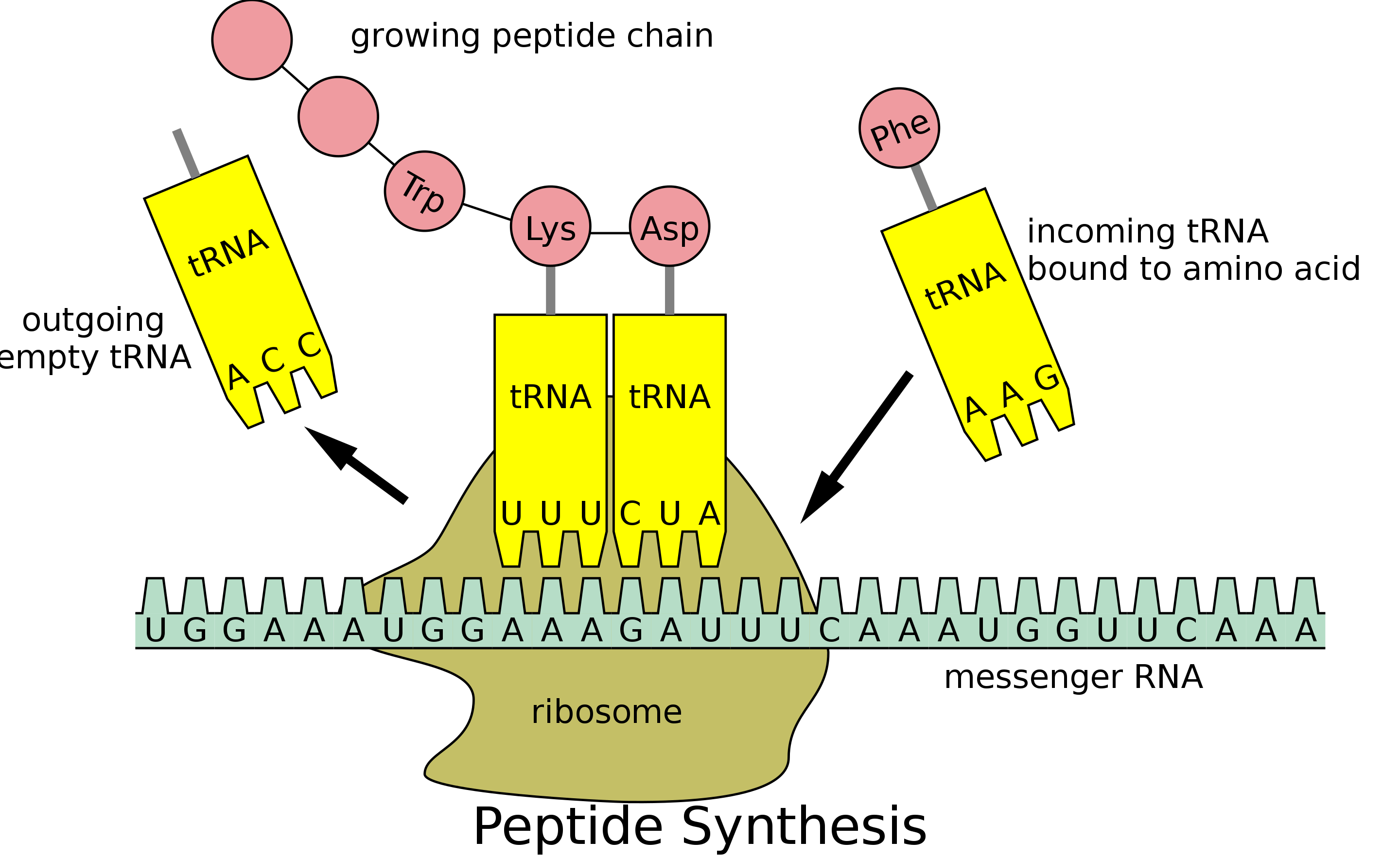
The human genome contains hundreds of these tRNA genes to ensure a plentiful supply for protein synthesis. The ones modified by Queuosine belong to specific families, with multiple gene copies coding for the tRNAs for Tyrosine (Tyr-GTA), Aspartic Acid (Asp-GTC), Asparagine (Asn-GTT), and Histidine (His-GTG).
Each tRNA molecule has two crucial functional regions. On one end—the 3′ terminus—it carries a specific amino acid, which is one of the standard building blocks of proteins. Most organisms use 20 different amino acids, but a few specialized tRNAs deliver additional amino acids such as selenocysteine or pyrrolysine. On the opposite side of the molecule, within a loop region, lies a three-nucleotide sequence called the anticodon.
This anticodon enables the tRNA to recognize and base-pair with a complementary three-nucleotide codon sequence on the mRNA blueprint. When the anticodon pairs with a codon on the mRNA strand (permitting certain non-standard, or “wobble,” pairings), the tRNA is positioned in the ribosome to deliver its amino acid, contributing it to the growing protein chain.
This process is the essence of translation, and its accuracy is paramount. A single mistake can lead to a non-functional protein. This is where the wobble position comes in.
The third position of the mRNA codon (and the first position of the tRNA's anticodon) has a bit more flexibility—or "wobble"—in its pairing rules. To manage this flexibility and prevent errors, the cell employs a sophisticated strategy: chemical modification.
By adding molecules like Queuosine to this specific spot, the cell can fine-tune the tRNA's decoding ability, ensuring it recognizes the right codons and only the right codons.
These modifications aren't just minor tweaks; they are essential regulatory elements that enhance the precision and efficiency of protein synthesis, ensuring the right proteins are built at the right time.
Queuosine: The What, Why, and How
Now we arrive at our star molecule: Queuosine (often abbreviated as Q). So, what exactly is it? Queuosine is one of the most complex and fascinating modifications found in tRNA.
It's a hypermodified nucleoside, a derivative of guanosine, that is placed in the wobble position of specific tRNAs—namely, those that carry the amino acids Tyrosine, Asparagine, Aspartic Acid, and Histidine.
Its presence is a game-changer for translation. By sitting in that critical wobble position, Queuosine ensures that the tRNA binds with high fidelity to its corresponding mRNA codons (specifically those ending in A or U), preventing the misreading of the genetic code that could otherwise occur.
But here’s the most crucial part of the story, and the reason it connects so deeply to our microbiome: we can't make it ourselves.
Unlike most of the building blocks our bodies need, eukaryotes (including humans) lack the genetic machinery to synthesize the core of the Queuosine molecule, a base called queuine.
We are completely dependent on external sources to get it. This means we must acquire queuine either directly from our diet or, more significantly, from the bacteria residing in our gut. These microbes synthesize queuine for us, which we then absorb and transport to our cells to be inserted into our tRNA. This makes Queuosine a true micronutrient, a 'vitamin' of microbial origin that is essential for the proper functioning of our cells.
The Genetics of Queuosine Metabolism
The journey of Queuosine from a bacterial product to a key component of our cellular machinery is a beautiful example of metabolic collaboration, governed by distinct sets of genes in both bacteria and eukaryotes.
Bacterial Production: The Starting Point
In the bacterial world, the synthesis of queuine is a complex, multi-step process. It all begins with a common cellular resource: Guanosine Triphosphate (GTP). Through an intricate enzymatic pathway, bacteria convert GTP into the queuine base. This process is exclusive to the microbial kingdom; our own cells simply don't have the genes to perform this transformation.
Eukaryotic Integration: The Handoff
Once we acquire queuine from our gut flora or diet, our cells take over. But how does this microbial micronutrient get into our cells in the first place? Recent research has identified a specific transporter protein responsible for this critical step.
The gene SLC35F2, which has also been identified as an oncogene (a gene with the potential to cause cancer), produces a transporter that is highly specific for moving queuine across the cell membrane. This discovery is a vital piece of the puzzle, explaining the gateway through which our bodies import this essential molecule from our microbiome.
After being transported into the cell, the process of inserting it into our tRNA is handled by a specialized enzyme complex called tRNA-guanine transglycosylase (TGT). This complex performs a remarkable molecular swap: it recognizes the specific tRNAs that need modification, cuts out the existing guanine base at the wobble position, and seamlessly inserts the queuine base in its place.
In humans, this crucial TGT complex is heterodimeric, meaning it's built from two different protein subunits. These subunits are encoded by two key genes:
* QTRT1 (Queuine tRNA-ribosyltransferase subunit 1): This is the catalytic heart of the enzyme, the part that does the actual work of swapping the bases.
* QTRT2 (Queuine tRNA-ribosyltransferase accessory subunit 2) (synonym: QTRTD1): This non-catalytic accessory subunit is essential for the stability and proper function of the complex.
Importantly, the TGT enzyme complex requires zinc ions (Zn2+) as a cofactor to function correctly, highlighting a direct link between essential mineral nutrition and this critical step in tRNA modification.
Disruptions in these genes can prevent the incorporation of queuine, leading to a Queuosine-deficient state even if plenty of queuine is available from the microbiome.
This elegant genetic handoff highlights our symbiotic relationship with bacteria—they perform the initial synthesis, and we have evolved the precise genetic tools to utilize their product.
The Critical Link: Queuosine, Tyrosine, and BH4
The importance of Queuosine snaps into sharp focus when we examine what happens when it's missing.
Early studies with germ-free mice, which lack a microbiome and thus a source of queuine, revealed a startling vulnerability: when the amino acid tyrosine was removed from their diet, the mice quickly developed severe neurological symptoms and didn't survive.
This was a puzzle, because tyrosine is considered a non-essential amino acid for mammals; we can typically synthesize all we need from another amino acid, phenylalanine.
This is where the connection to the metabolic disorder Phenylketonuria (PKU) becomes clear.
In classic PKU, a genetic defect in the Phenylalanine Hydroxylase (PAH) enzyme prevents the conversion of phenylalanine to tyrosine. This leads to a toxic buildup of phenylalanine and a deficiency in tyrosine, causing severe neurological damage if untreated. While a Queuosine deficiency creates a similar outcome — an inability to produce tyrosine — the underlying mechanism is different and, in many ways, more subtle.
Research has shown that in a Queuosine-deficient state, the PAH enzyme itself is perfectly normal. The problem lies with its essential helper molecule, or cofactor, called tetrahydrobiopterin (BH4).
The conversion of phenylalanine to tyrosine is an energetically demanding reaction that requires BH4. The key discovery was that a lack of Queuosine leads to a significant increase in the oxidation of BH4, converting it into an inactive form (BH2). The cell's recycling systems can't keep up, and the available pool of active BH4 plummets.
Without sufficient BH4, the PAH enzyme simply cannot function effectively. It's like having a high-performance engine (PAH) with no fuel (BH4).
This creates a bottleneck in the metabolic pathway, leading to reduced tyrosine production. This finding is profound: the absence of a single microbial-derived modification in tRNA can cripple a vital metabolic pathway, not by breaking the primary enzyme, but by starving it of its necessary cofactor. This has far-reaching implications, as BH4 is not just for making tyrosine; it's also essential for the production of key neurotransmitters, including dopamine and serotonin.
Our Microbiome: The Ultimate Source
This brings us full circle, back to the trillions of organisms living in our gut. The entire intricate pathway we've just described is completely dependent on the initial production of queuine by our gut bacteria. This isn't just a minor contribution; it's a fundamental dependency. The health and composition of our microbiome directly dictate the availability of a molecule required for the proper synthesis of amino acids and, by extension, neurotransmitters.
This is a powerful and concrete example of the gut-brain axis. The chain of events is clear: the state of your gut flora influences the amount of queuine produced. This, in turn, affects the levels of Queuosine in your tRNA, which then governs the stability of the BH4 cofactor. Finally, the availability of BH4 determines your capacity to produce not only tyrosine but also the monoamine neurotransmitters—dopamine, norepinephrine, and serotonin—that are vital for mood, focus, and overall neurological function.
A disruption in this supply chain, perhaps due to antibiotics, poor diet, or other factors that alter the microbiome, could have tangible effects on our neurological health. While the full picture of all queuine-producing microbes is still emerging, research has identified several key players in the human gut, including species like Escherichia coli, Bacteroides fragilis, and Lactobacillus reuteri (Ref 1, Ref 2).
This underscores the critical importance of maintaining a healthy and diverse internal ecosystem, as our bacteria are not just passive residents; they are active partners in our most essential metabolic processes.
Broader Health Implications
The story of Queuosine extends even beyond the gut-brain axis. Its role in maintaining cellular health is multifaceted and an active area of research. Two of the most significant emerging themes are its connections to oxidative stress and mitochondrial function.
By helping to stabilize the BH4 cofactor, Queuosine indirectly protects the cell from oxidative stress. Unstable BH4 can lead to the production of reactive oxygen species (ROS), or free radicals, which can damage cellular components like DNA, proteins, and lipids. By preserving the BH4 pool, Queuosine helps maintain cellular redox balance, a critical aspect of overall health.
Furthermore, both cytosolic and mitochondrial tRNA species are modified with Queuosine. This is particularly important because mitochondria, our cellular powerhouses, are major sites of ROS production. The presence of Queuosine in mitochondrial tRNA suggests it plays a role in ensuring the efficient and accurate synthesis of mitochondrial proteins, which is essential for proper energy production and for minimizing oxidative damage from within the mitochondria themselves.
Given these fundamental roles, it's not surprising that Queuosine deficiency is being increasingly linked to a range of human diseases. Preliminary research has pointed to its potential involvement in neurodegenerative diseases, certain types of cancer, and various neuropsychiatric disorders, all of which have links to mitochondrial dysfunction and oxidative stress.
The link to cancer is particularly compelling. Many cancer cells exhibit a metabolic shift known as the Warburg effect, where they consume large amounts of glucose to produce lactate, even when oxygen is plentiful. A fascinating study on HeLa cells (a cervical cancer cell line) revealed that a deficiency in queuine directly promotes this Warburg-type metabolism. This deficiency led to a decreased rate of ATP synthesis and even caused the mitochondrial ATP synthase to run in reverse – a trait often seen in cancer that helps stabilize the mitochondrial membrane.
The study suggests that tumors may deliberately reduce their queuosine levels, as doing so provides a metabolic advantage that supports growth and survival.
This connection is no longer just theoretical. Recent research has provided a stunning clinical example. A study focusing on patients with mitochondrial diseases caused by genetic variants in the mitochondrial tRNA for Asparagine (mt-tRNA Asn) found that these individuals had markedly lower levels of queuine in their blood. In lab experiments using cells from these patients, supplementing them with queuine was shown to be remarkably effective.
It rescued mitochondrial function by restoring the levels of essential mitochondrial proteins, improving cellular respiration, and decreasing damaging reactive oxygen species.
This elevates Queuosine from a molecule of interest to a potential therapeutic agent, highlighting its promise for treating specific, genetically-defined mitochondrial disorders.
Genes List
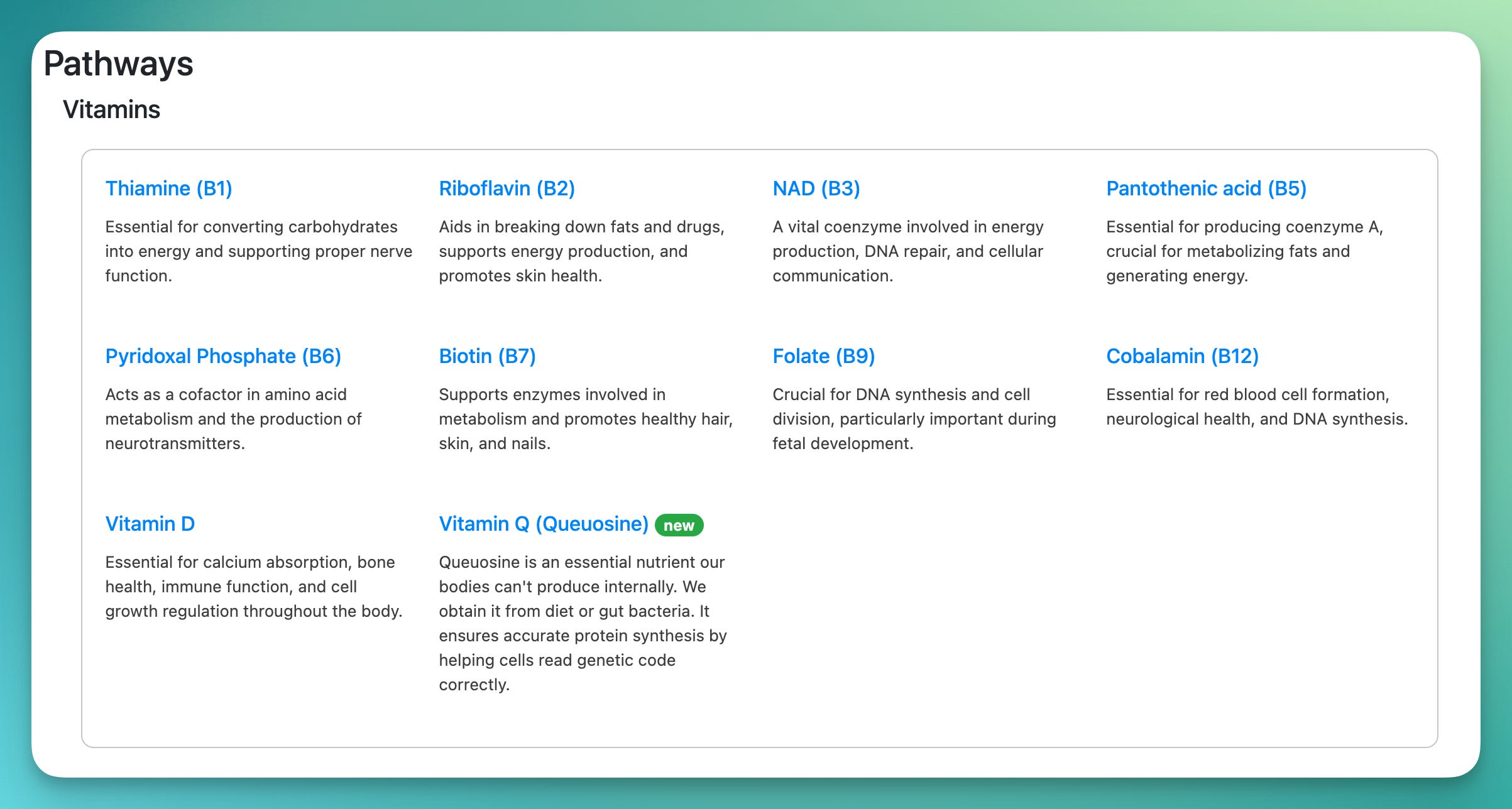
For a deeper dive into the genetics, these genes are curated in the "Vitamin Q" panel in Gene Inspector Pro:
* QNG1 (Queuosine 5'-phosphate N-glycosylase/hydrolase), also known as C9orf64.
* QTRT1 (Queuine tRNA-ribosyltransferase subunit 1)
* QTRT2 (Queuine tRNA-ribosyltransferase subunit 2) (synonym: `QTRTD1`)
* SLC35F2 (Solute carrier family 35, member F2) - transporter of queuine.
https://blogs.ifas.ufl.edu/news/2019/09/05/so-called-longevity-vitamin-might-hold-more-importance-than-scientists-thought/